
Kuromon Market Food Tour
Tours & tickets

Hand-picked by our editors — only the best 5 experiences from 47 reviewed

Open today 08:00–18:00
Attendance: Moderate — summer season
Markets are busy today so watch for moving carts and crowds.
Free cancellation Instant confirmation Mobile voucher Verified partner Skip-the-line
Tickets

Choose your ticket

Verified partners for every tour, free cancellation where available, and instant confirmation on every booking.

Osaka Walking Tour: Icons & Hidden Gems 4 hr
Guided Experience

Osaka Walking Tour: Icons & Hidden Gems

4.8 (737)
$58
per person
Instant Mobile voucher Flexible — change up to 24h

Discover Osaka's castle grounds, vibrant markets, and local neighborhoods on this 4-hour guided walk

Reserve
Osaka Essential Landmarks Walking Tour with Ramen 7 hr
Guided Experience

Osaka Essential Landmarks Walking Tour with Ramen

4.7 (432)
$60
per person
Instant Mobile voucher Flexible — change up to 24h

Discover five iconic Osaka attractions on foot with a local guide, plus authentic ramen included

Reserve

Prices from verified partners. Availability updates in real time at checkout. Free cancellation policies apply where shown.

What you'll do

Inside a tour, step by step

  1. 01 15m

    Arrival

    Meet near Nippombashi Station

Highlights

What you'll see inside the attraction

The landmarks, rooms, and views travelers on this tour remember — all visible on a single visit.

Fresh Seafood Stalls

Famous for high-quality sashimi and grilled scallops served daily. Some stalls have been operating for generations, providing authentic tastes of Osaka's culinary heritage.

Head to head

Kuromon Market Food Walking Tour vs. Dotonbori Street Food: Where to Prioritize

They complement each other; most visitors who do both call the Kuromon Ichiba Market the more authentic culinary exploration, whereas Dotonbori is the more thrilling nightlife center. Choosing a kuromon market food walking tour allows you to witness the morning bustle of local vendors before you explore the neon-lit eateries of the canal district.

Feature Top pick Kuromon Market Dotonbori
Atmosphere
High-energy neon nightlife
Primary Food Type
Hot takoyaki and okonomiyaki
Operating Hours
11:00–00:00 or later
Crowd Intensity
High evening density
Authenticity Focus
Tourist-focused entertainment zone

Verdict: While kuromon market food walking tour tours provide an intimate look at Osaka’s fresh ingredients, those seeking kuromon market food walking tour tickets for group experiences often balance their itinerary with the spontaneous dining atmosphere found in Dotonbori. You should prioritize booking a kuromon market food walking tour if you value ingredient provenance, whereas Dotonbori is better suited for a casual evening of iconic Osaka snacks.

How your ticket works

Book your ticket in 3 steps

  1. 01

    Book online

    Choose your ticket, select your date, and reserve in under two minutes. Secure checkout handled by our verified partner.

  2. 02

    Receive your mobile voucher

    Instant confirmation by email, with a mobile voucher you can save offline. No printing, no queuing at a collection desk.

  3. 03

    Show & enter

    Arrive at the entrance, show your voucher on your phone, and walk in. Most tickets include priority or skip-the-line access.

Plan your visit

Everything you need to know before you go

Practical details for your visit straight from our verified partners — hours, access, rules, and how to get there.

Open today · 08:00–18:00
Opening Hours
08:00–18:00
Address
2-4-1 Nipponbashi, Chuo-ku, Osaka, 542-0073, Japan
Entry Fee
0 JPY (Free entry)
Best Arrival
09:00–14:00
Storage
Not available on-site
Navigation
Use Osaka Metro Nippombashi Station
Mon
08:00–18:00
Tue
08:00–18:00
Wed
08:00–18:00
Thu
08:00–18:00
Fri
08:00–18:00
Sat
08:00–18:00
Sun
08:00–18:00
Main entrance

Nippombashi Station

2-4-1 Nipponbashi, Chuo-ku

Exit 10 is closest to the market entrance

Address
2-4-1 Nipponbashi, Chuo-ku, Osaka, 542-0073, Japan
Storage
Not available on-site
Navigation
Use Osaka Metro Nippombashi Station

How to get there

🚆
Public transport · 5m · 210-240 JPY

Take the Sennichimae Line or Sakaisuji Line to Nippombashi Station. The market is a short 2-minute walk from the exit.

Dress code

Casual and comfortable clothing is recommended for your kuromon market food walking tour. Wear supportive walking shoes as you will traverse several city blocks on pavement.

Bags & security

Keep personal belongings close during your Osaka culinary excursion. The narrow aisles of the market can get crowded, making small crossbody bags a safer choice.

Photography

Photography is generally permitted in public areas of the market. Always ask shop vendors before taking close-up photos of their merchandise during your kuromon market food walking tour.

Accessibility

The market is a flat, ground-level thoroughfare suitable for wheelchairs. Be aware that the narrow, busy lanes can make maneuvering challenging during peak hours.

Mobile phones

Mobile phone use is permitted, but please step out of the flow of traffic to take calls or check maps. This ensures the market remains navigable for all visitors.

What to bring

  • Cash in JPY
  • Refillable water bottle
  • Hand sanitizer
  • Portable battery
  • Comfortable footwear

Not allowed

  • Large suitcases
  • Drones
  • Tripods
  • Alcoholic beverages (outside designated areas)
  • Loudspeakers
  • Smoking materials
  • Pets (in food areas)
  • Shopping carts (large)

Families & strollers

Families are welcome at this Osaka landmark. Parents should keep a close watch on children, as the aisles are busy with delivery scooters and food vendors.

Food & drink

This location is famous for its fresh seafood and street snacks. Your kuromon market food walking tour will likely introduce you to regional delicacies like grilled scallops and takoyaki.

Pets

Pets are generally discouraged due to the high density of food stalls. Service animals are permitted according to local Japanese regulations.

Good to know

As a local market, many vendors prefer cash payments for small snack purchases. Ensure you have small bills ready for your kuromon market food walking tour.

Meeting point

Where to find us

Nippombashi Station

2-4-1 Nipponbashi, Chuo-ku

Exit 10 is closest to the market entrance

Get directions
Around your visit

Everything else worth knowing

Best time to go, insider tips, nearby landmarks, and the cancellation fine print — flip through to skim what matters to you.

Best time to visit

How crowds, weather, and events shift across the year.

Spring

Mild temperatures make walking pleasant in March through May. Expect higher visitor counts during cherry blossom season.

Summer

August brings heat and humidity to the market. Early morning visits are best to avoid the midday peak.

Autumn

Comfortable weather prevails in October and November. Fresh seasonal produce arrivals are frequent.

Winter

January and February are colder but provide excellent hot street food options. The market remains active throughout the season.

Helpful tips for your visit

Small details that turn a good visit into a great one.

Avoid peak lunch hours

The market is most crowded between 12:00 and 13:00. Arrive during the recommended morning window for a better experience.

Respect the vendors

Do not touch raw fish or produce on display. Ask the shopkeeper if you would like to handle items.

Carry cash

Smaller stalls often do not accept credit cards. Having 1,000 JPY notes makes transactions smoother.

Eat as you go

Most food is served to-go. Use the designated waste bins provided by stalls or carry a bag for your trash.

Stay to the left

Follow local etiquette by walking on the left side of the aisle. This allows for easier movement in the narrow market streets.

Nearby landmarks

Non-bookable sights within a short walk — free to visit, easy to pair.

Dotonbori

10m

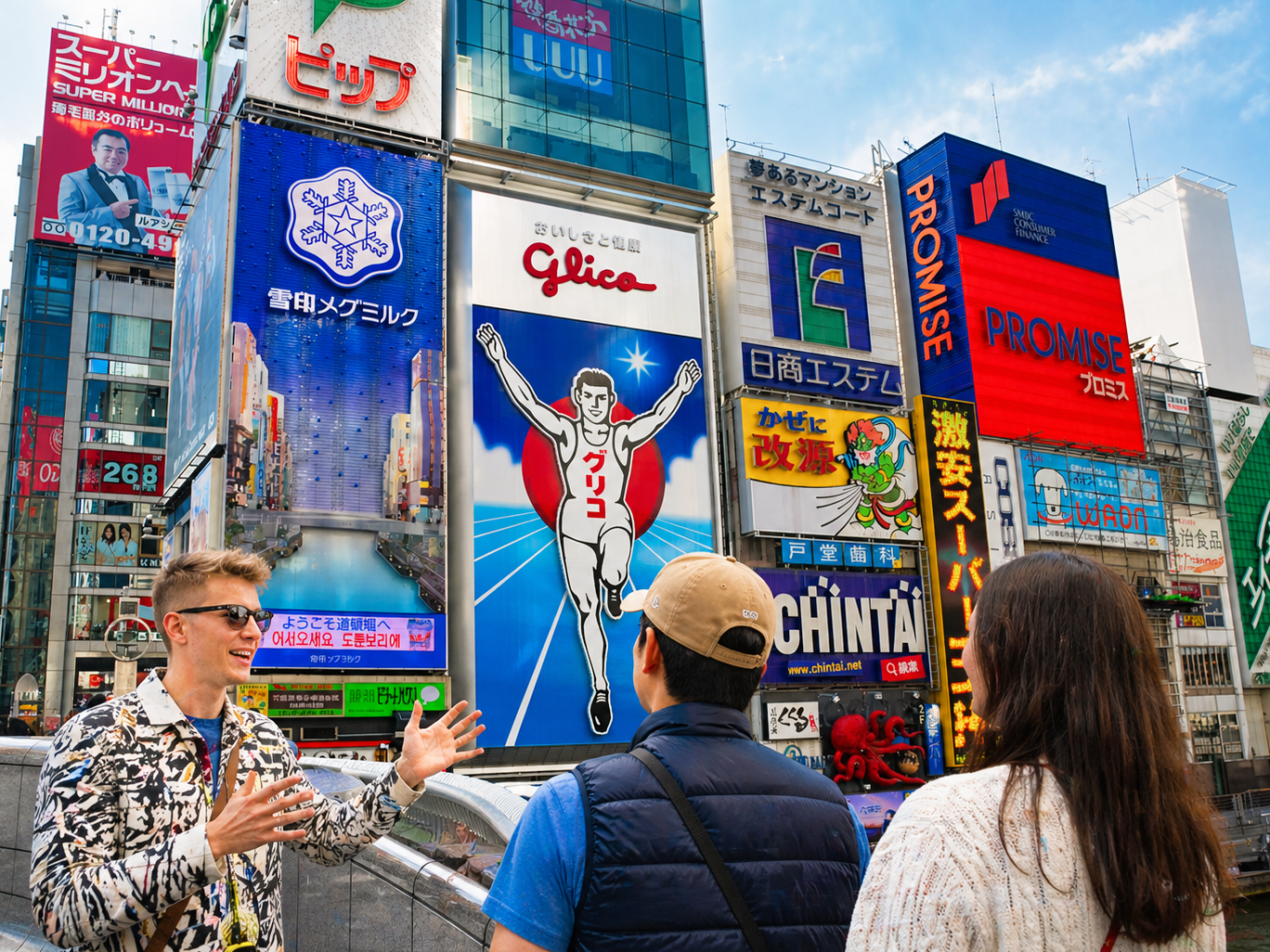
A famous canal district known for neon lights and massive food signs.

Cancellation policy

Flexible, no hidden fees.

Since entry to the market is free, there is no cancellation policy for general admission. If booking a private kuromon market food walking tour, confirm terms directly with your operator.

Where to stay

Hotels & districts near the attraction

Hand-picked options within walking distance — pick a district for vibe, or a specific hotel for convenience.

Namba District

5m
mid-range

Dense area filled with hotels near the market.

About

The place, in context

Kuromon Ichiba opened in 1822 as a temple-adjacent produce depot serving Osaka's southern wards. The 580-meter arcade earned its nickname — Osaka's Kitchen — not through marketing but through two centuries of unbroken supply to the city's restaurants, hotels, and home cooks. By the 1950s the covered market housed 150 permanent stalls specializing in categories rarely overlapped: Kobe beef butchers occupied the northern third, fresh catch vendors lined the center corridor, and picklers and tea merchants anchored the southern exit. The corrugated roof installed in 1912 remains intact, its steel trusses now supporting LED panels that replaced the original tungsten bulbs in 2004. Today the market operates as both wholesale hub and retail destination. Professional chefs arrive before dawn to secure tuna loins and seasonal vegetables. Tourists join by mid-morning, drawn by grilled scallops sold at stall fronts and kaisendon bowls assembled from cases of uni, ikura, and fatty tuna. A Kuromon market food walking tour follows a deliberate route: guides lead groups past the fugu preparation stations where licensed cooks trim poison sacs, through the narrow sake tasting alcoves stocked with regional junmai, and into the dried goods quarter where konbu sheets hang in ten-foot ribbons. The path avoids redundancy. Each stop demonstrates a distinct element of Osaka's culinary infrastructure. The market's architecture dictates visitor flow. Stalls open directly onto the central aisle with no interior seating, forcing vertical browsing. Vendors stack inventory overhead on steel shelving that reaches the roofline. Prices appear on handwritten cards clipped to baskets. The absence of English menus or digital menus is intentional preservation, not oversight. Osaka food tours crossing Kuromon allocate 90 minutes to the arcade, a duration calibrated to the human tolerance for standing, tasting, and navigating crowds in a 12-foot-wide corridor. Kuromon's reputation solidified during the postwar decades when black-market rice dealers occupied the eastern stalls. By 1952 the market had transitioned to legitimate trade, but retained its cash-only ethos and handshake supplier relationships. Third-generation stallholders now account for 40 percent of vendors. The market's modern challenge is balancing wholesale volume with tourist traffic. Morning hours remain the domain of professionals. The kuromon market food walking tour tickets sold by local operators typically schedule departures between 9:00 and 11:00, a window that captures both fresh inventory and manageable foot traffic before the afternoon closures that begin at 15:00.

"The 580-meter arcade earned its nickname through two centuries of unbroken supply to Osaka's restaurants and home cooks."
Your experience

What a tour day looks like

A step-by-step walkthrough of the visit — what you'll see, how long each stage takes, and the details that matter.

You enter Kuromon Ichiba at the eastern gate, where the scent of grilled shellfish meets refrigerated air from the seafood cases. Your guide stops at the third stall on the right, a fugu specialist who filleting a blowfish with surgical precision. You watch the knife separate toxic liver from pale flesh in five seconds. The guide explains the three-year licensing process required to handle the species. You move deeper into the corridor. At the tuna counter, a vendor carves a 40-kilogram loin into sashimi slices. You sample a piece of o-toro, the fatty belly cut that dissolves on your tongue. Two stalls later, you pause at a yakitori grill where a cook fans binchotan charcoal under skewered chicken hearts. The guide hands you a paper cup of cold sake from the adjacent stand. The route shifts to the produce quarter. You pass pyramids of Kyoto daikon, bundles of shiso leaves, and wooden crates of yuzu. Your guide stops at a pickle vendor, offering tsukemono samples from ceramic bowls: takuan, shibazuke, umeboshi. Each bite registers a different fermentation timeline, from three days to six months. You exit through the western gate after 90 minutes, having covered 580 meters at a deliberate pace designed to let you absorb the market's rhythm without rushing past the details that define Osaka's culinary backbone.

Frequently asked

Frequently asked questions about kuromon market food walking tour tours

What are the opening hours for Kuromon Ichiba Market?

The market is open daily from 08:00 to 18:00. Please plan your visit within these hours.

Is there a fee for kuromon market food walking tour tickets?

Entry to the market itself is 0 JPY (Free entry), though private guided tours may have their own fees.

Can I visit the market without a guide?

Yes, you can explore the market independently without a formal tour.

How do I get to the market for my kuromon market food walking tour?

The market is located at 2-4-1 Nipponbashi and is easily reached via Nippombashi Station.

Are there lockers available at Kuromon Ichiba Market?

There are no dedicated storage facilities on-site, so please travel light.

What is the best time for a kuromon market food walking tour?

The best arrival window is 09:00–14:00 to experience fresh produce and active stalls.

Is the market accessible for wheelchairs?

Yes, the market is flat and accessible, though it can become quite crowded.

Can I bring my own food into the market?

You are welcome to purchase street food from various vendors as you walk through the market.

Are children allowed on a kuromon market food walking tour?

Yes, children are welcome, but be mindful of the busy and narrow walkways.

What happens if I need to cancel my tour?

Cancellation policies for a kuromon market food walking tour depend on your specific operator's terms.