
English| EUR
Suggested for you
More currencies
Choose a language
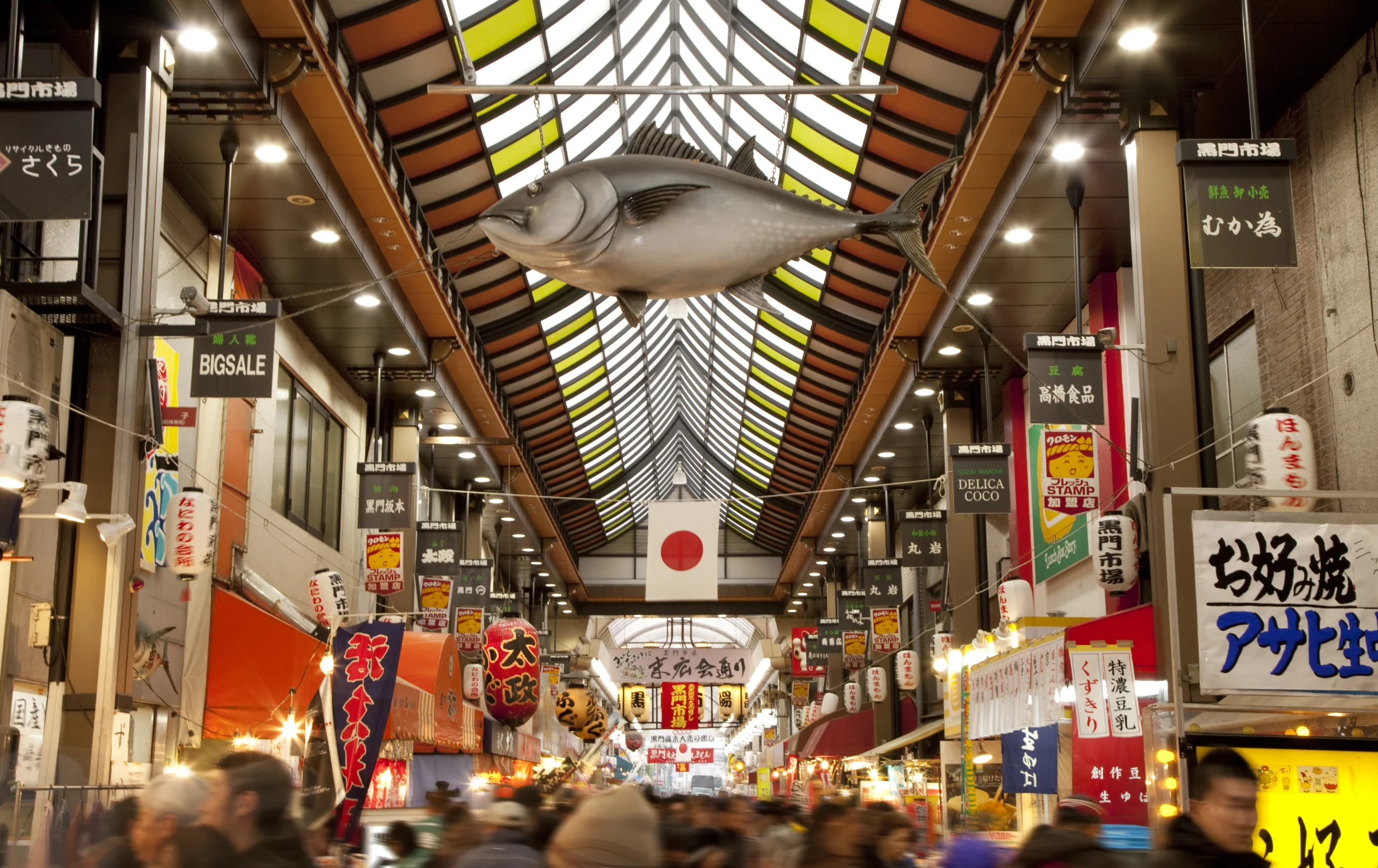
Kuromon Ichiba Market stretches across 580 meters of covered arcade in Osaka's Chuo district, housing roughly 150 vendors selling everything from live king crab to mochi sweets. The challenge is not finding food — it is navigating the density of choice without missing the stalls locals queue for. This guide identifies what to eat and where to find it.
Quick answer
The essential foods at Kuromon Market are fresh uni and scallops grilled on-site, king crab legs served steaming at seafood counters, takoyaki from the western entrance vendors, A5 wagyu beef skewers near the center arcade, seasonal strawberries and melon in spring and summer, and fugu prepared by licensed stalls in winter. Most vendors accept cash only; expect to spend 500-3000 yen per item depending on portion size and ingredient grade.
Kuromon Market earned its nickname "Osaka's Kitchen" not through tourism marketing but through 190 years of supplying the city's restaurants with seafood landed at dawn and produce harvested within the Kansai region. What distinguishes the market today is that vendors now serve the same ingredients directly to visitors, often grilled or assembled while you wait. The seafood arcade dominates the eastern half. Stalls display live scallops, sea urchin, and octopus in refrigerated cases, then grill or torch them to order. Tuna stalls slice sashimi from whole loins; some offer toro by the slice for immediate consumption. King crab — particularly snow crab and red king crab — appears in winter months, steamed and cracked tableside. Fugu preparation requires a licensed chef; three vendors in the market hold the certification and serve the delicacy as sashimi or in hot pot format from November through March. The oyster specialist near stall 68 shucks Hiroshima and Hokkaido varieties and serves them raw or grilled with ponzu. Wagyu beef vendors occupy the center section. Several grill skewers of marbled Kobe or Matsusaka beef over charcoal; others sell pre-sliced cuts for home preparation. Takoyaki stalls cluster near both entrances, each claiming a distinct batter recipe or octopuce sourcing advantage. The reality is consistency — most use the same regional flour and local octopus, and quality varies more by cook skill than ingredient. Seasonal fruit stalls near the southern arcade sell strawberries from January through May, Yubari melon in summer, and persimmons in autumn. Prices reflect grade; a single perfect melon can exceed 5,000 yen, while a punnet of standard strawberries costs 800-1,200 yen. Mochi shops and daifuku vendors line the western exits, offering red bean, matcha, and seasonal fillings. Most stalls provide small samples; tasting before buying is standard practice here. The Kuromon Market food experience rewards strategic timing and cash readiness. Stalls open progressively from 8:00 AM, with seafood vendors arriving first and prepared-food stalls following by mid-morning. Crowds peak between 11:00 AM and 1:00 PM on weekends. Vendors begin closing individually from 3:00 PM onward, and by 6:00 PM most have shuttered. Free entry and the open-arcade format mean you can move through quickly or linger; the layout favors grazing over sit-down meals.
“The seafood sold here at dawn is the same grade served in Osaka's kaiseki restaurants by evening — you are simply meeting it earlier in the supply chain.”
Kuromon Market offers a wide array of street food stalls specializing in fresh seafood and grilled meats. For visitors seeking to balance market-side dining with quieter environments, several local restaurants operate just outside the main thoroughfare to escape the peak crowds.
market
Located within the market, this establishment serves high-quality sashimi and kaisen-don bowls prepared from their own seafood inventory.
street
Found at various stalls in the market, grilled scallops and buttered abalone are prepared on-site over open flames.
street
Specializing in wagyu beef, this stall offers skewers grilled to order for a quick, savory market snack.
restaurant
Situated near the market perimeter, this spot provides a seated environment for traditional nigiri if you prefer to step away from the walkway.
The best arrival window is 09:00–14:00, which serves as the optimal time for fresh produce and peak market atmosphere before stalls begin closing. Arriving during this timeframe ensures access to the widest variety of seasonal delicacies and active food preparation.
—
Fewer visitors allow for easier navigation between food stalls. Early arrival ensures peak availability of fresh seafood and produce.
Mild, 15°C to 23°C
Pleasant weather attracts more tourists to outdoor-adjacent areas. Expect busy walkways during peak midday hours.
Cool, 12°C to 20°C
Comfortable temperatures encourage market exploration. This period coincides with seasonal culinary specialties often featured at stalls.
Verdict: The concrete best slot is arriving between 09:00 and 14:00 on a Tuesday, Wednesday, or Thursday during April or October.
Kuromon Ichiba Market operates daily throughout the week. Individual stall hours may vary depending on their specific business operations.
Kuromon Ichiba Market is located at 2-4-1 Nipponbashi, Chuo-ku, Osaka, and is most easily accessed via the Osaka Metro network. The market is situated a short walk from major transit hubs in the Namba and Nipponbashi areas.
Sennichimae Line or Sakaisuji Line to Nipponbashi Station
Kintetsu Nara Line to Kintetsu-Nipponbashi Station
From Namba Station (Nankai/JR/Metro)
For the best access, exit Nipponbashi Station via Exit 10. We recommend planning your arrival within the 09:00–14:00 window to enjoy the market when stalls are fully active.
Kuromon Market operates as a working wholesale and retail space where local customs matter. Observing a few key behaviors ensures a smooth experience for yourself and the vendors serving you.
Everything you need to know about what to eat at kuromon market
When considering what to eat at kuromon market, you will find a vast array of fresh sashimi, grilled scallops, wagyu beef skewers, and seasonal fruit. Many visitors enjoy sampling small portions from multiple vendors to experience the full variety of local flavors. Exploring what to eat at kuromon market is best done by walking through the vibrant aisles and looking for the freshest catches of the day. For those planning their itinerary, deciding what to eat at kuromon market often involves prioritizing street food specialties like takoyaki or fresh uni.
Many travelers choose a guided Osaka food tour to navigate the bustling lanes and learn about the history behind the ingredients. Booking a tour can provide deeper context, although you are free to explore the stalls independently if you prefer a self-guided experience. These tours often help you sample diverse delicacies that you might otherwise overlook.
The best arrival window is 09:00–14:00 to ensure you experience the peak market atmosphere and fresh produce availability. Arriving during these hours helps you avoid the later afternoon period when some stalls begin closing for the day. This timing provides the most authentic experience for those curious about what to eat at kuromon market.
There is no entrance fee for the market, as it is a public space open to all visitors. You only pay for the specific food items or goods you choose to purchase from individual vendors. This makes it an accessible destination for any budget looking to explore local Japanese culinary culture.
The market is located at 2-4-1 Nipponbashi, Chuo-ku, Osaka, 542-0073, Japan. You can easily reach this central Osaka landmark using local public transportation, with several subway stations located within walking distance. It is recommended to check your map app for the most efficient route from your specific starting point in the city.
Yes, this Osaka landmark is famous for its high-quality seafood stalls that offer fresh sashimi, oysters, and grilled fish. You will find that many vendors specialize in specific aquatic products, allowing you to taste high-end ingredients in a casual street-food setting. It remains one of the premier spots in the region for seafood lovers.
Yes, the market is open from 08:00–18:00 every day, including Saturdays and Sundays. Whether you visit on a weekday or a weekend, the operating hours remain consistent throughout the week. This flexibility allows you to fit the market into your schedule regardless of your departure date.
While it is a public market, it is important to follow basic etiquette by not eating while walking and using designated areas for consuming your food. Respect the stall owners by not blocking pathways and disposing of your trash in provided bins. Avoiding these common mistakes ensures a pleasant experience for everyone visiting this popular destination.